Amsterdam with Young Kids: What Actually Works (And What Doesn't)
Travelling to Amsterdam with young kids? Here's the honest version: where to stay, how to handle public transport with a stroller, what to skip, and what your kids will actually remember.
Most family travel guides for Amsterdam read like a museum brochure. They list the Rijksmuseum, the Van Gogh Museum, and the Anne Frank House, then skip the part where your three-year-old sits down on a cobblestone bridge while a cyclist rings their bell behind you.
This guide is for the practical version of the trip: where to stay, how to move around with a stroller, what to skip, and how to build days that do not end in everyone needing a reset.
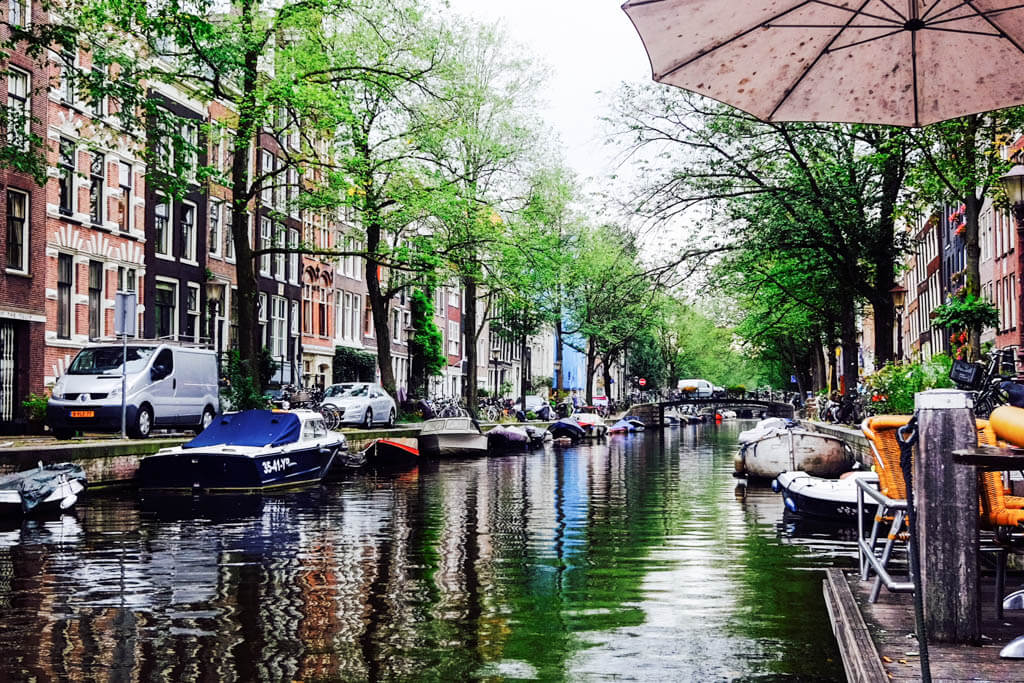
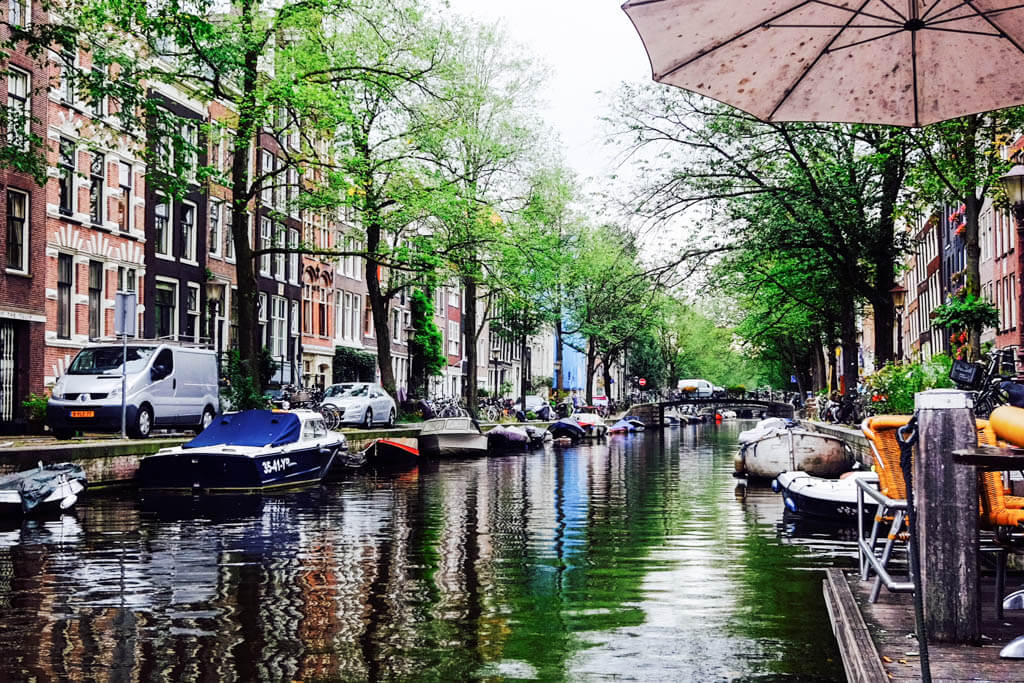 Amsterdam on a calm day. The canals are beautiful, but most edges have no railings. Image: Zest In A Tote
The honest answer is that Amsterdam with young kids can be brilliant or exhausting. The difference usually comes down to three decisions: where you stay, how you move around, and how much you try to fit into each day.
Watch before you plan This 2025 Amsterdam with kids family vlog is useful because it shows the real details: stroller streets, tram boarding, parks, food stops, and how a young child actually experiences the city.
The Decision That Shapes Everything: Where You Stay
Book this wrong and no amount of good planning rescues the trip.
The tourist centre of Amsterdam - the streets around Dam Square, the Red Light District, and Leidseplein - is not the easiest place to sleep with young children. It can be loud at night, pavements are narrow, and foot traffic builds fast. You will probably pass through it at some point. You do not need to base your family there.
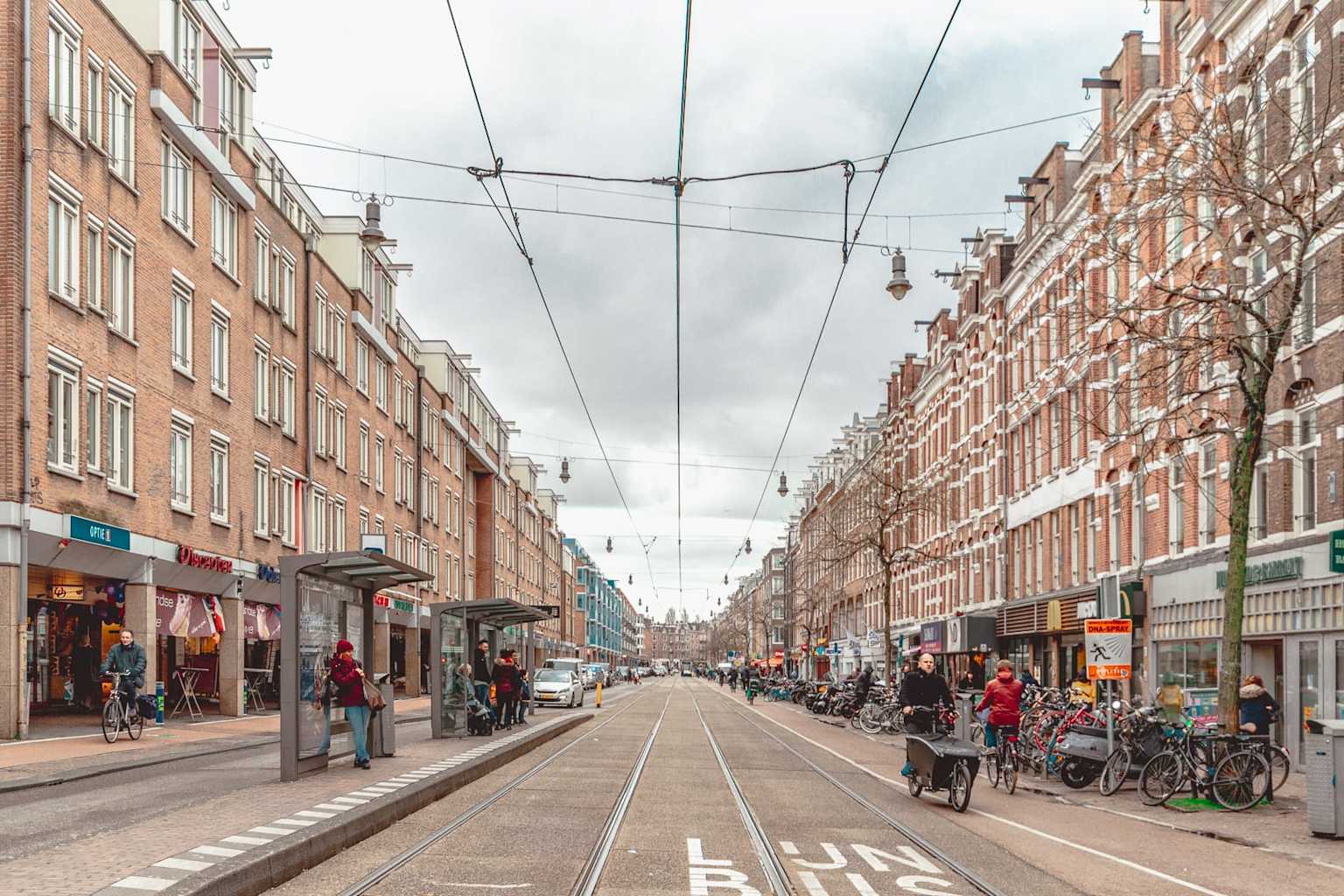 Oud-West gives families calm streets, tram links, supermarkets, and Vondelpark close by. Image: Sarah Latham / A Walk Through Oud-West
Oud-West, near Vondelpark is the safest default for many families. You get quiet residential streets, large supermarkets, tram connections in several directions, and Vondelpark on your doorstep. The park has proper playgrounds, open grass, a summer theatre, and enough space for a child to run without the whole day feeling managed.
De Pijp is livelier but still manageable. The Albert Cuypmarkt runs through the area six days a week, so lunch can be as simple as a snack from the market and a bench nearby. Metro line 52 also makes it fast to reach Centraal, Noord, and Zuid.
Oost, or East Amsterdam, is the calmer choice if you want more space. Artis Zoo is nearby, Oosterpark works well for downtime, and the area feels more residential than performative.
The Jordaan is beautiful but narrow. Some houses are all spiral stairs and no lift. If you have a stroller, check the entrance, staircase, and canal-side street on Street View before booking.
Getting from Schiphol Without Losing Your Mind
The stress point for many families is predictable: landing at Schiphol with tired children, luggage, a checked stroller, and no clear plan.
Here is the simple version.
The train
Schiphol to Amsterdam Centraal is one of the easiest airport transfers in Europe. The train platforms sit inside the terminal building, trains run frequently, and the journey is usually around 15-17 minutes.
You do not need a ticket machine if you are paying contactless. Tap your debit card, credit card, Apple Pay, or Google Pay at the NS gate before going down to the platform, then tap out when you arrive. Children under 4 travel free on Dutch trains.
The train is fine with a stroller. If you are arriving during the day and staying somewhere with a straightforward tram or taxi onward connection, this is usually the best first move.
The one reason to skip it: if you land late, have an infant, or need child seats, pre-book a taxi that provides them. Search for "taxi Schiphol kinderstoeltjes" and book ahead. Expect roughly EUR 40-55 to central Amsterdam, depending on time and destination.
After you arrive: forget about renting a car
Amsterdam is not a car-first city. A rental car adds parking costs, tight streets, bike traffic, and tow-away zones that are not always obvious to visitors. Public transport and walking cover the city better.
Need the transport basics first? Our Amsterdam Public Transport Guide covers trams, buses, metro, ferries, OVpay, prices, and the mistakes visitors make most often.
Trams and Buses with a Stroller
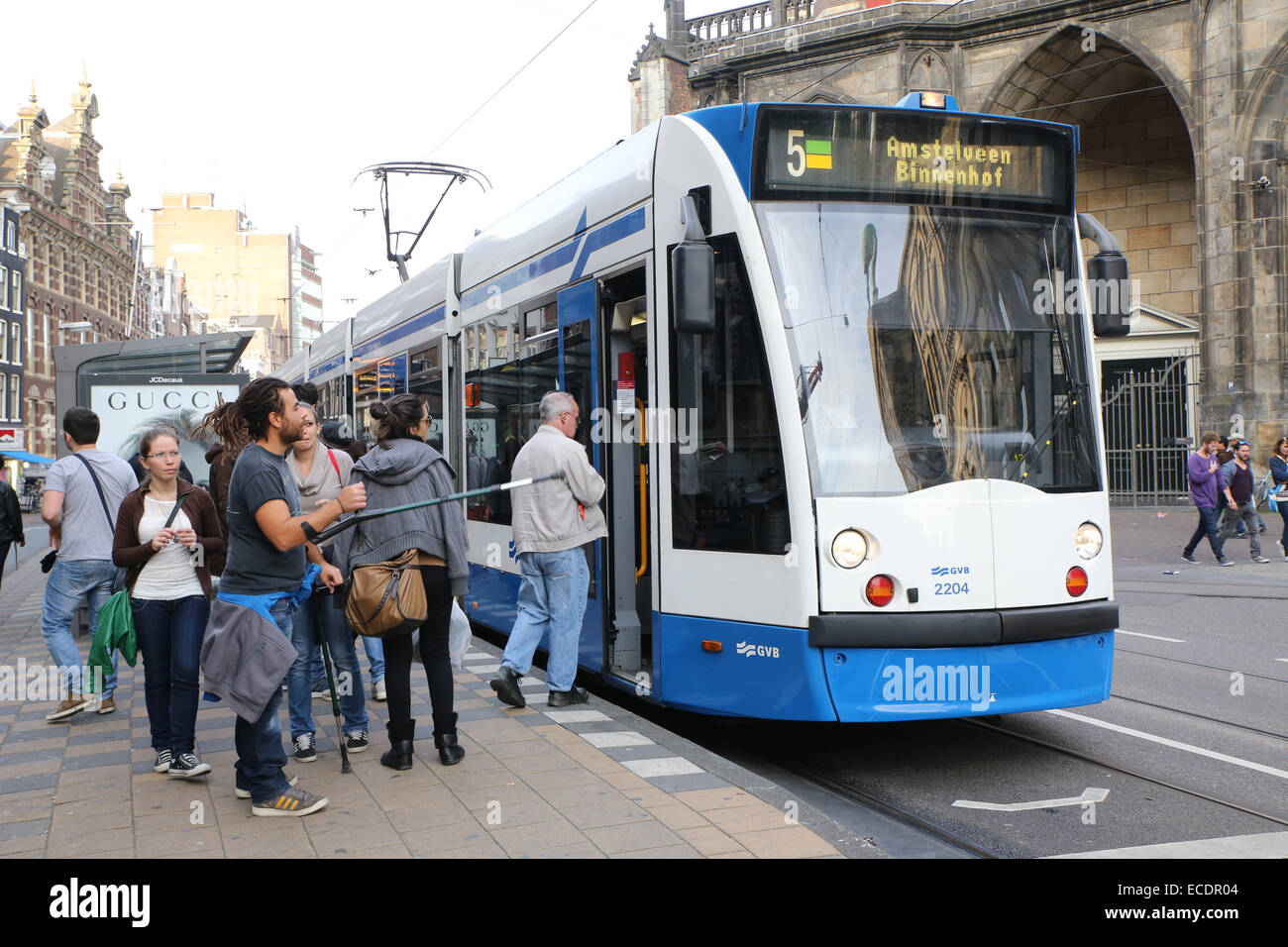 Use the wide door with the stroller symbol, park in the dedicated space, and tap out when you leave. Image: Alamy
The fear is bigger than the reality. Amsterdam trams, buses, and metro are navigable with young children if you do three things well.
Use one payment method per adult. Tap the same contactless card or phone when you board and again when you exit. GVB's daily OVpay cap is EUR 10.50 per person per day on GVB city transport, as long as you use the same card and make complete trips. It does not apply to NS trains or night buses.
Board through the wide stroller door. On trams, look for the door with the stroller symbol. There is a dedicated bay inside. If it is full, step back and wait for the next tram. On many lines, that is only a few minutes.
Travel off-peak when you can. The calmest window is usually 10:00-15:00. Rush hour is workable for a short ride, but it is not the time to learn the system with a stroller, luggage, and a hungry child.
One small Amsterdam truth: many children love the transport itself. The free ferries behind Centraal Station to Amsterdam Noord take only a few minutes, give you wide water views, and feel like an event to a five-year-old. Build a simple first-morning loop: tram to Centraal, ferry to Noord, snack, ferry back.
The Bike Lane Rule
Amsterdam's bike infrastructure is fast, normal, and not decorative. There are more bikes than people in the city, and locals ride as if the lanes are roads, because they are.
The rule to teach before you arrive:
If the surface is red, or if the path runs beside the road and bikes are moving on it, it is probably a bike lane. Do not walk on it.
Show your child a photo of an Amsterdam bike lane before the trip. It takes ten minutes and prevents most of the moments that make visitors describe Amsterdam as stressful with kids.
In parks, including Vondelpark, cycling paths also cut through the green space. Use the pedestrian paths and keep young children close at crossings.
The Canal Situation
Amsterdam's canals are beautiful. They also have very few railings.
This surprises visiting families more than almost anything else. It does not mean Amsterdam is unsafe, but it does mean you cannot zone out while a toddler is within sprinting distance of the water. Keep young children close on narrow canal-side streets.
If your accommodation sits directly on a canal, check the street setup on Google Street View before booking. Some canal streets are wide and manageable. Others are narrow, busy, and edged by water two steps from the front door.
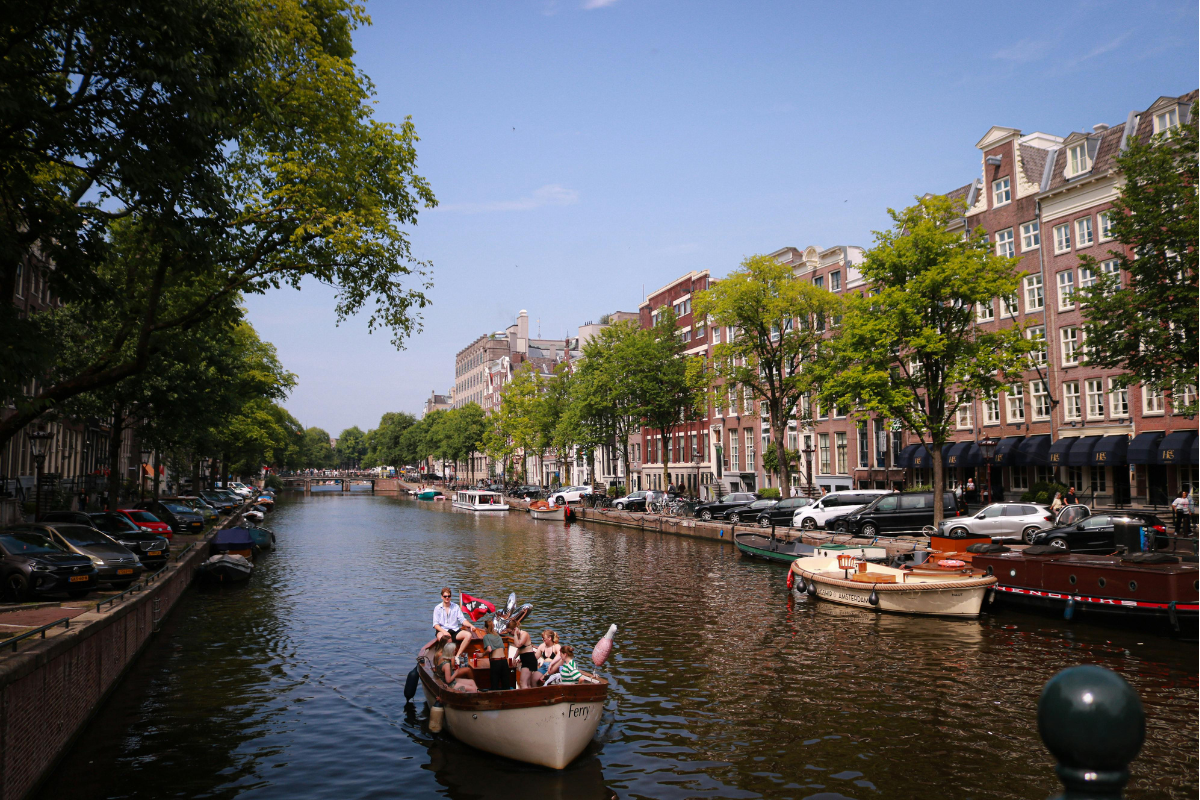
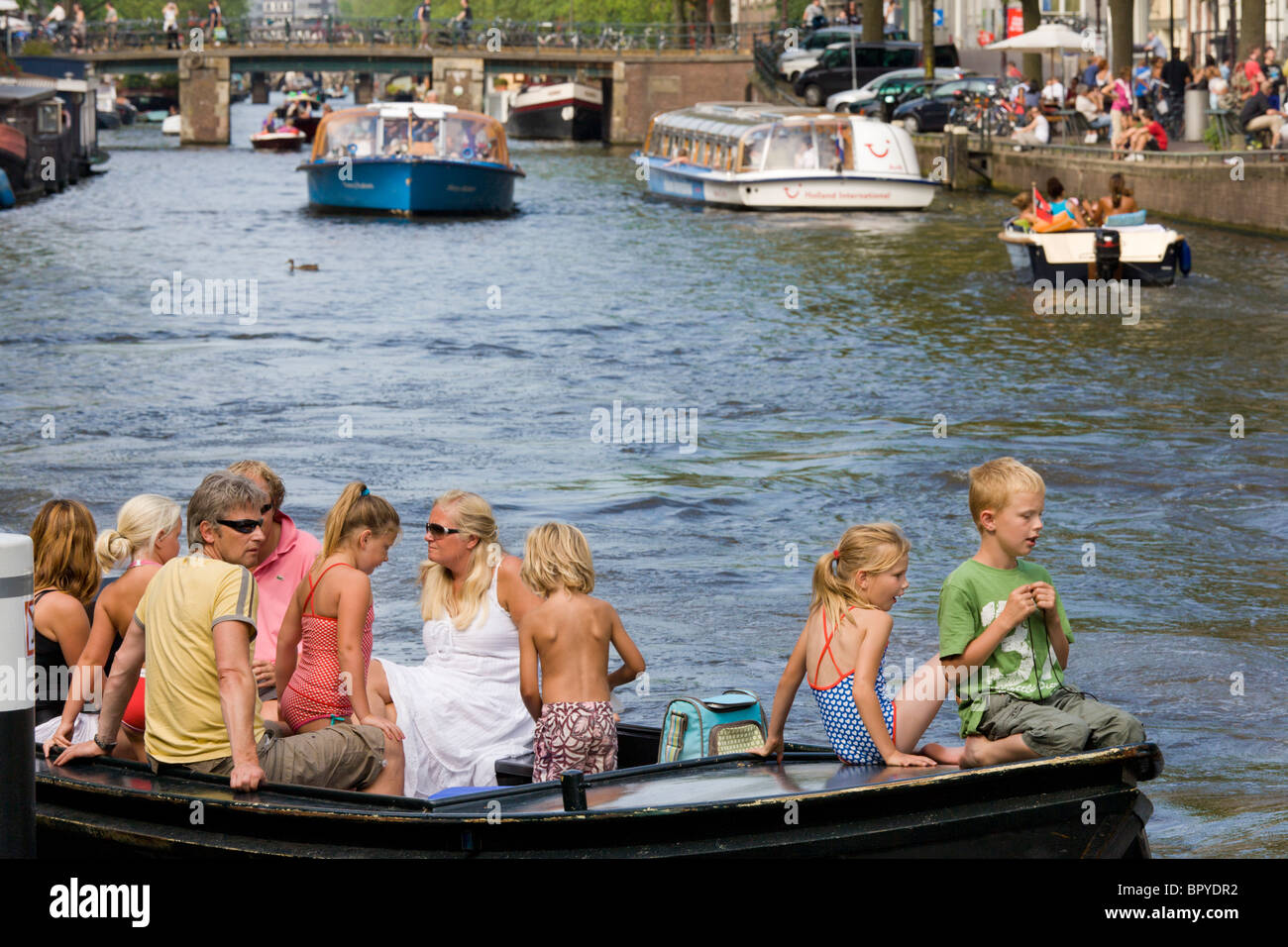 A canal boat turns the water from something to manage into the main attraction. Image: Alamy
One activity changes the whole feeling: a canal boat tour. The water stops being a hazard and becomes the reason you are there. Most operators are family-friendly, and children tend to enjoy being at water level, looking up at bridges and houseboats.
For young families, a smaller open or semi-private boat is often better than a large glass-topped tour boat. There is less crowd noise, easier boarding, and more room to point things out.
What to Do Without Overloading the Day
The families who have the best time in Amsterdam tend to follow the same pattern:
one proper activity per day, then food, park, and wandering.
That is enough. Trying to do NEMO in the morning, Artis in the afternoon, and a canal cruise in the evening is usually how the wheels come off.
NEMO Science Museum
NEMO is five floors of hands-on science where children are supposed to touch, push, pull, build, and test things. It is one of the best rainy-day options in the city.
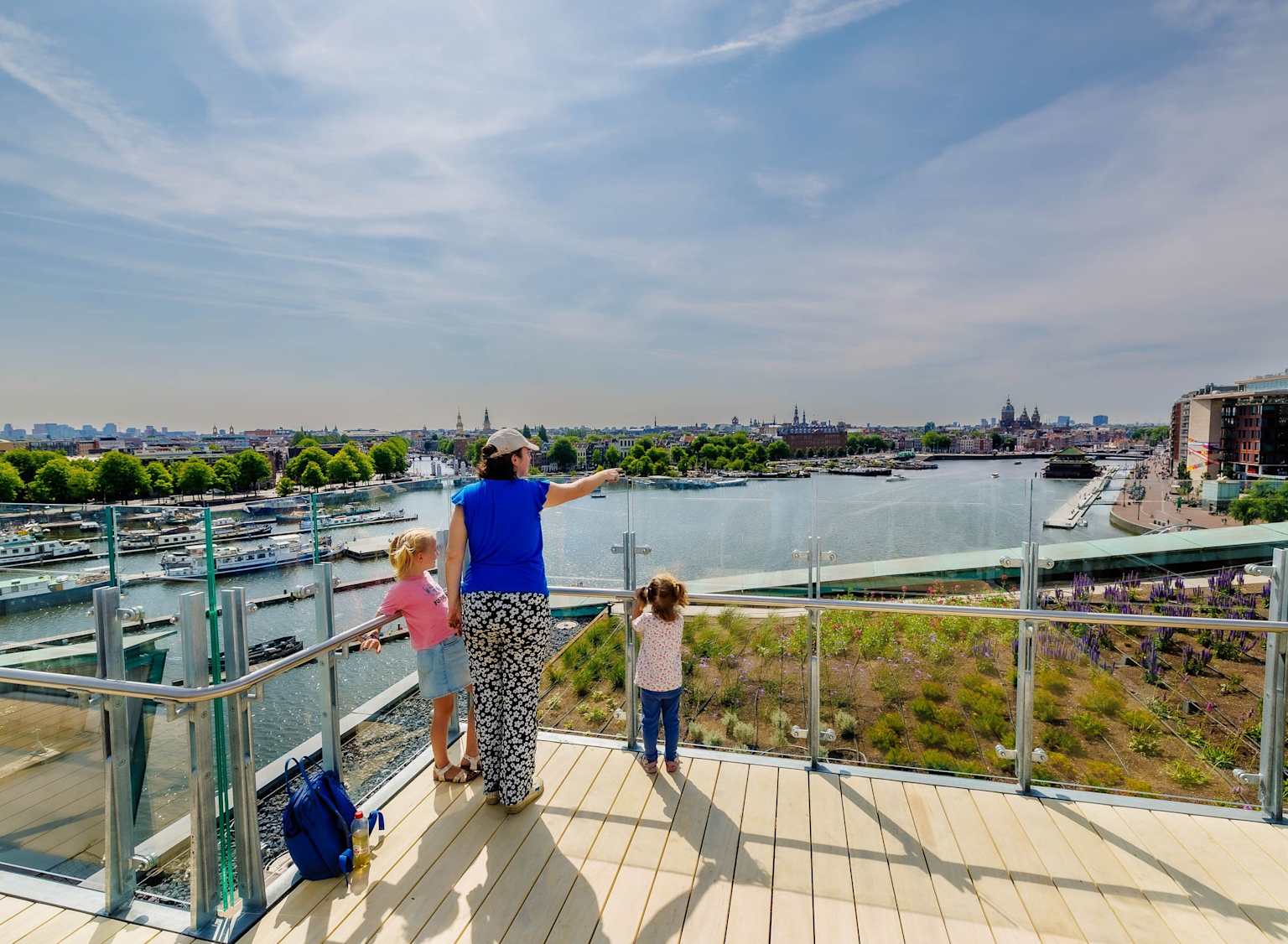 The NEMO rooftop adds open air, harbour views, and a slower finish after the museum floors. Image: NEMO Science Museum
Do not rush the rooftop. It has open space, views over the harbour, water features in warmer months, and a cafe. Pre-book online, especially during weekends and school holidays.
Artis Royal Zoo
Artis is one of the oldest city zoos in Europe and works well because it sits inside the city rather than at the end of a long transfer. The planetarium and aquarium make it more than a quick animal loop. Oosterpark is nearby if you need a quieter second half of the day.
Harbour day: ships, ferries, water
The area around Centraal Station and the Eastern Docklands is underrated for families. The National Maritime Museum has a full-scale replica of an 18th-century VOC merchant ship that children can board and explore. The waterfront is flat, wide, and easier with a pushchair than many canal-belt streets.
Add the free ferry behind Centraal and you have a low-friction day built around boats, views, and movement.
The Two Local Parent Picks: Amstelpark and Amsterdamse Bos
Ask an Amsterdam parent what they do with young kids on a free Sunday and these two names come up often.
Amstelpark
Amstelpark sits in South Amsterdam and feels like it was designed by someone who understood children. There is a miniature railway, a maze, a playground, minigolf, and a small animal area. It barely registers on many tourist plans. That is part of why it works.
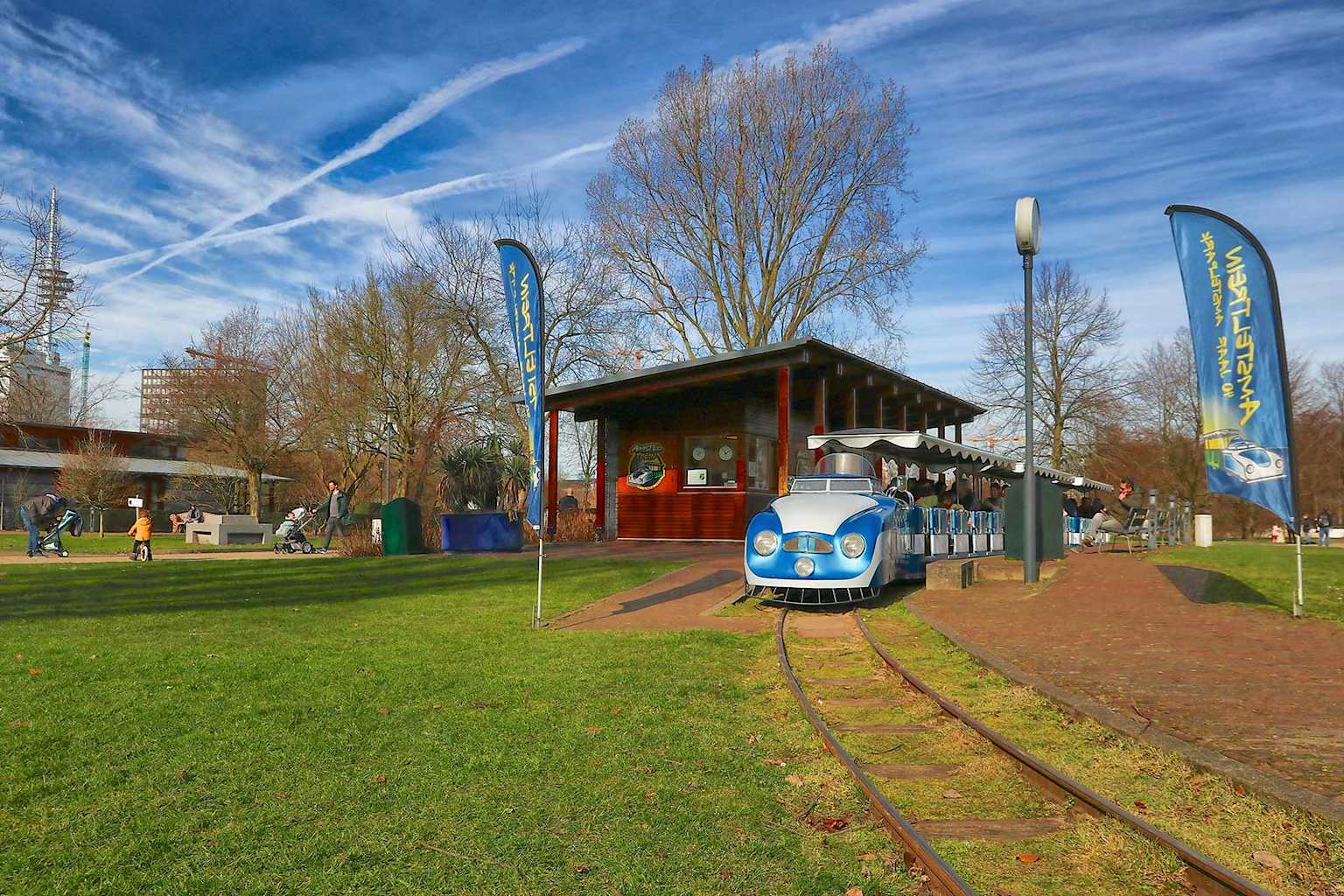 The miniature railway at Amstelpark is simple, local, and exactly right for many children aged 2-8. Image: Amstelpark
Amsterdamse Bos
Amsterdamse Bos is a large forest park southwest of the centre. Inside it, Boerderij Meerzicht serves Dutch pancakes next to a goat farm. There are walking paths, bike routes, canoe rental, and enough open space for a family day that does not feel city-shaped.
It is especially useful if your trip is getting too crowded or too museum-heavy.
Vondelpark playgrounds
Vondelpark is the easiest reset button in the city. The best family stop is Groot Melkhuis: playground, cafe terrace, and lawn in one place. It is free to use and busy with local families whenever the weather gives Amsterdam a chance.
Day Trips by Train
The Netherlands is built for this. You tap in, board, and arrive without renting a car or thinking about child seats.
For children aged 4-11, check the NS Railrunner ticket before travelling. In 2026 it is listed by NS at EUR 2.50 for a child ticket, and children under 4 travel free.
| Destination | Journey time | Why it works with kids |
|---|---|---|
| Utrecht | 30 min | Miffy Museum, Railway Museum, compact centre |
| Haarlem | 15 min | Quieter canals, good playgrounds, easy half-day |
| Zaanse Schans | 20 min | Windmills, clog workshop, cheese, outdoors |
| The Hague + Scheveningen | 50 min | Madurodam miniature park plus the beach |
| Leiden | 35 min | Naturalis dinosaur museum, calm canals, smaller streets |
Planning a train day? Read our Amsterdam Train Travel Guide for NS ticket basics, surcharge traps, and easy day-trip routes.
Budget: The Honest Numbers
Amsterdam is expensive, especially restaurants. Families who keep the trip affordable usually self-cater for at least two meals a day.
- Book accommodation with a kitchen if you can. Breakfast and picnic food from Albert Heijn save real money.
- Use parks daily. Vondelpark, Westerpark, Oosterpark, Amstelpark, and Amsterdamse Bos are free and useful.
- Skip the OV-chipkaart for short visits. OVpay means most visitors can tap in with a bank card or phone instead of buying a separate card.
- Use the ferries behind Centraal. For pedestrians and bikes, the GVB ferries across the IJ are free.
Realistic per-adult daily spend outside accommodation:
- EUR 40-60 with supermarket breakfast/lunch and one paid activity or modest dinner
- EUR 70-100 if you eat out more fully
Practical Checklist
- Choose your neighbourhood carefully: Oud-West, De Pijp, or Oost before the tourist core
- Use the train from Schiphol unless you need pre-booked child seats
- Teach the bike-lane rule before you land
- Check canal-side accommodation on Street View
- Bring a compact stroller or carrier
- Plan one anchor activity per day
- Use trams outside rush hour where possible
- Pre-book NEMO, Artis, and major museums
- Check the NS Railrunner ticket before day trips
- Leave space for parks, snacks, and doing less
Frequently Asked Questions
Is Amsterdam safe for young children?
Yes, with two specific things to manage: bike lanes and canal edges. Teach children to stay off red bike lanes before you arrive, and keep young children close near open water. Outside those two, Amsterdam is welcoming, walkable, and used to families.
Do I need a car in Amsterdam?
No. Public transport, walking, and the occasional taxi cover the city well. A car usually adds parking costs and navigational stress.
How does the tram work with a stroller?
Tap your contactless card or phone on the yellow GVB reader when boarding, then tap out when exiting. Use the wide door with the stroller symbol and park in the dedicated bay. The easiest travel window is usually 10:00-15:00. Read the full Amsterdam Public Transport Guide before your first ride.
What is the best neighbourhood for families?
Oud-West near Vondelpark is the strongest default: calm streets, supermarkets, playgrounds, and good tram connections. De Pijp and Oost also work well, depending on how lively or quiet you want the trip to feel.
Should I pre-book museums?
Yes. Pre-book NEMO, Artis, the Rijksmuseum, and other major attractions, especially during weekends, school holidays, and wet-weather days.
What does a day in Amsterdam cost for a family?
Budget around EUR 40-60 per adult per day outside accommodation if you self-cater for breakfast and lunch. If you eat out for most meals, EUR 70-100 per adult is more realistic.
Exploring Amsterdam at your own pace? Mokum Tour turns a walk, bike ride, or boat trip into GPS-triggered Amsterdam stories: 200+ landmarks, 5 languages, no group required.
Image credit: Zest In A Tote
🎧 Explore Amsterdam with Audio Stories. Made for bike, boat or walking.
Hear the stories behind every landmark. 200+ points of interest, 5 languages.
Get Your Access →